

.png)


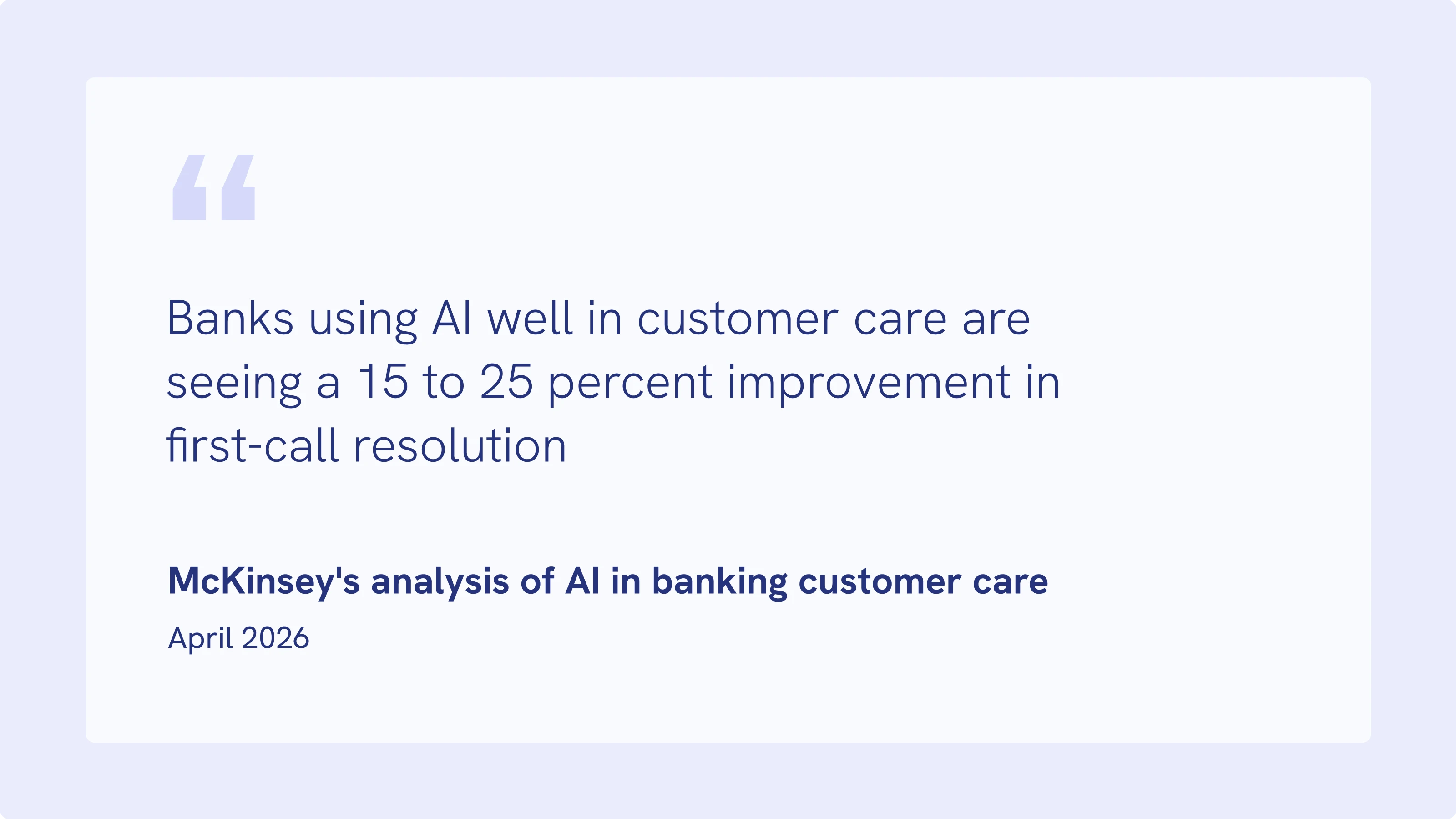
Banks using AI well in customer care are seeing a 15 to 25 percent improvement in first-call resolution, according to McKinsey's April 2026 analysis of AI in banking customer care.
But we shouldn't take this at face value.
You see, first contact resolution (sometimes still called "call center first call resolution" when talking about voice channels specifically) is one of the easiest metrics in a contact center to improve on paper without improving it in practice.
That's not to say it's impossible, however. There are three ways that we can genuinely raise the odds of solving a customer's problem the first time:
- Letting the agent see what the customer sees.
- Giving the agent a confident answer instead of a reason to transfer.
- Measuring resolution honestly rather than by an internal completion flag.
This post takes them one at a time, along with the question the generic FCR advice space skips: is the number you're reporting actually true.
Why do most first attempts actually fail?
A first attempt doesn't fail because an agent doesn't know the answer. Instead, most failed first attempts trace back to one of two root causes: the agent and customer describing the same screen differently, or the agent lacking the customer history needed to answer confidently.
In other words, miscommunication, not lack of knowledge, is the issue.
Verbal description is where resolution breaks down. Forrester's research on visual engagement in customer service found that agents using tools like Co-Browsing, screen sharing, and annotation help agents and customers understand each other better and connect more effectively than a purely verbal exchange. The finding predates the current wave of AI tooling, which says something: the problem visual guidance solves isn't a new one, and it isn't primarily a knowledge problem.
Channel is part of the mechanism, not just a delivery detail. Swiss Post's own contact center data shows this pattern at scale: phone resolves 40% of contacts on the first attempt, compared to 60% for Live Chat and 70% for WhatsApp. The channels that let an agent and customer reference the same text, the same error message, or the same detail without the pressure of a live verbal exchange are the channels that resolve issues in one pass. Voice, given the nature of the channel, resolves the fewest.
Three banks show the mechanism at work, under three different kinds of pressure. They show how you can resolve the issue inside a single interaction rather than across several. Banca Dello Stato holds Co-Browsing-assisted calls to a 10-minute average AHT while absorbing a 15% rise in support requests without adding headcount, because the agent is watching the actual problem happen rather than a description of it.
Crédit Agricole next bank guided more than 60,000 migrating clients through a new e-banking platform with Embedded Co-Browsing during a period when call volume multiplied tenfold, and reported 4.7 out of 5 client satisfaction on those sessions.
Finally, a major French corporate bank running Embedded Co-Browsing on its SME portal reports a 7-minute AHT and 4.6 out of 5 CSAT on assisted calls.
When the agent sees what the customer sees, the callback disappears
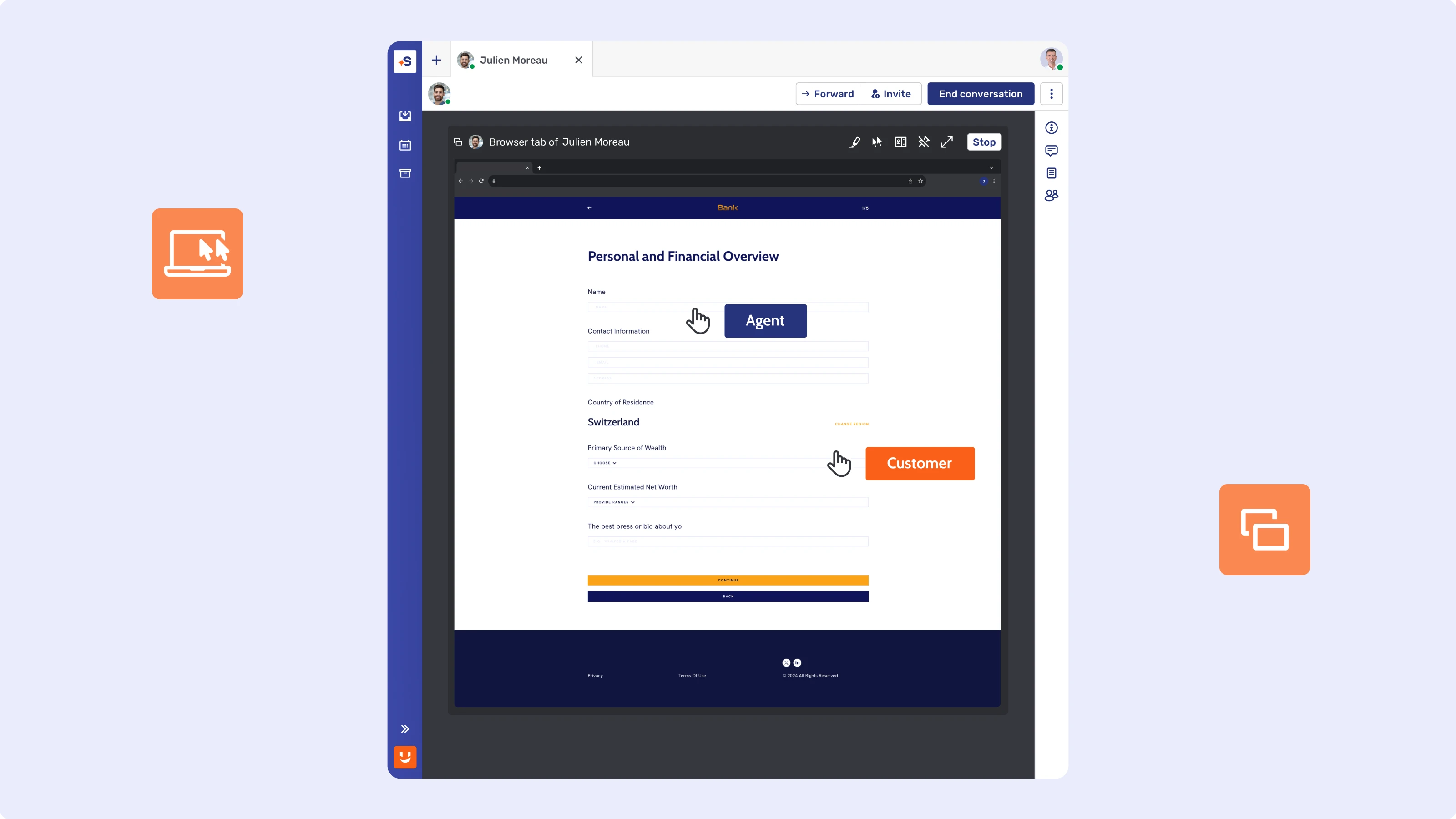
Embedded Co-Browsing lets an agent see and guide a customer through the exact same interface in real time, with sensitive fields like passwords and card numbers automatically masked. There's no ambiguity about which button, which field, or which error message, because both people are looking at the same one.
This closes the specific gap that causes callbacks and hurts customer retention. A customer who was talked through a form, rather than shown it, is the customer most likely to make a mistake after hanging up and call back to fix it, and repeat contacts are exactly what erodes customer loyalty and, over time, drives customer churn. Removing the ambiguity at the point of the first contact removes the most common reason for a second one.
None of this requires the customer to install anything. Co-Browsing runs in the existing session the customer is already in, whether that's a banking portal, a mobile app, or a support page, so there's no separate download or app to explain before the actual help can start.
Why does a knowledgeable agent resolve more on the first try?
The other common reason a first attempt fails isn't visual, it's informational: the agent doesn't have a confident answer, so the safest option is a transfer or an escalation, and the resolution happens somewhere else, later.
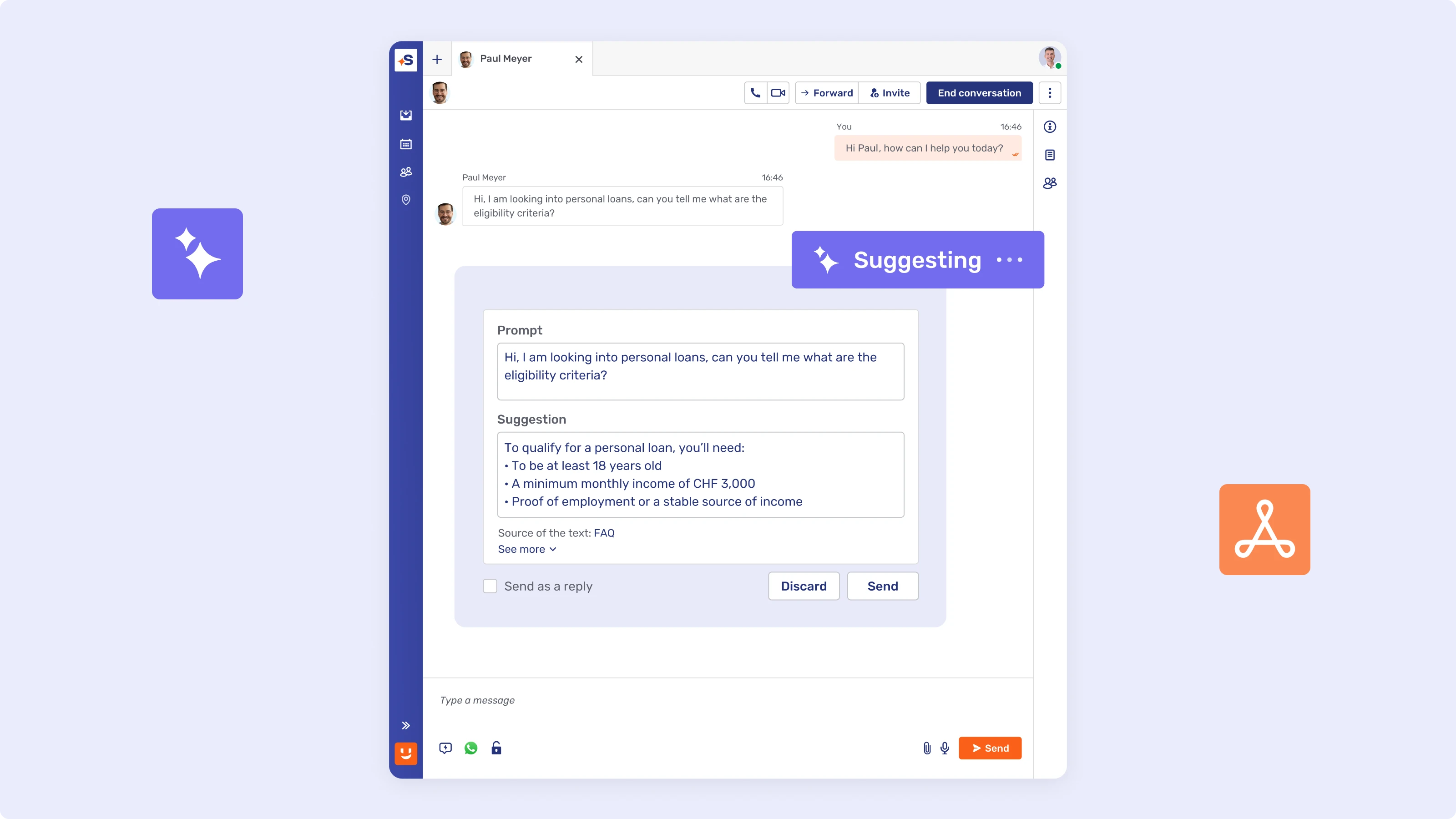
A confident first answer resolves more than a cautious transfer. When an agent has to leave the conversation to find an answer, check a policy, or ask a colleague, the odds that the issue gets fully resolved in that first contact drop, because each handoff is a chance for the thread to break. The fix isn't a bigger manual; it's putting the answer where the agent already is, at the moment they need it.
BPER Banca's advisors escalate less because they're not guessing. BPER equipped 700 advisors with Unblu's Bot Sidekick, integrated with Salesforce and grounded in the bank's own knowledge base of approved documents, with each advisor's customer history and prior contacts visible in the same window. The next-best-action prompt appears where the advisor is already working, which is also the reason AHT fell 20% for BPER: fewer moments of uncertainty mean fewer transfers, and fewer transfers mean fewer conversations that get "resolved" by handing the customer to someone else.
Is a high FCR number always a real one?
This is the question the generic FCR playbook skips, and it's the one that determines whether an improvement is a real result or a reporting artifact.
FCR can look strong on a dashboard and be wrong on the ground. SQM Group's research on repeat contacts has found that first call resolution can appear strong because calls get marked "resolved" once internal steps are completed, even when resolution from the customer's point of view doesn't match resolution from the system's point of view. A case closed correctly on the back end and reopened by the same customer three days later, with a fresh reason code and no reference to the original contact, was never actually a first-contact resolution. Post-call surveys and direct customer feedback catch this gap; an internal completion flag does not.
In a regulated bank, that issue isn't just a reporting problem. The Consumer Financial Protection Bureau has warned that financial institutions risk violating federal consumer protection law when AI or chatbot deployments provide inaccurate information or make it harder for a customer to get a real answer. A complaint marked resolved internally, with the underlying issue unaddressed, is exactly the kind of gap that turns into a compliance finding once a customer escalates it themselves.
The FCR number that matters is the one that doesn't come back
A first contact resolution rate is only as good as the definition behind it. Fewer callbacks because the agent could see the problem, and had the customer's history on hand, is a real result and a genuine driver of customer retention and Net Promoter Score. Fewer callbacks because the case got closed before it was actually fixed is a liability wearing a good metric's clothes.
The pattern across Banca Dello Stato, Crédit Agricole next bank, the anonymised French corporate bank, and BPER Banca isn't a single feature. It's the same principle from two directions: give the agent the visual context to verify the problem, and give them the informational context to answer it confidently, so escalation and re-contact both become the exception rather than the plan.