Clients now use 2.3 wealth managers on average globally, according to EY's 2026 Global Wealth Management Industry Report – and 45% of wealthy clients plan to move a quarter to half of their assets in the near term. Client relationships that used to be exclusive are now openly competitive, and the firms losing share aren't necessarily losing on investment performance; many are losing on engagement, at the exact moment 41% of an advisor's time is still going to operational tasks rather than clients, per Capgemini's 2026 Relationship Manager Survey.
This is where client engagement comes into play. It measures the depth and frequency of communication between an advisor and a client – not just a monthly statement, but the contact that builds trust, strengthens client relationships, and surfaces opportunities on both sides.
The problem isn't a lack of desire to engage more; it's that operational work crowds out the time that would go toward it, and it's compounding just as firms have to work harder to win those clients in the first place.
Why does client engagement keep losing to admin work?
Clients are asking for more contact, not less. Accenture found 39% of clients want more proactive outreach from their advisors, and 28% want more meetings. Interestingly, this directly contradicts the assumption that digital channels mean clients want less from their advisor. The same research found nine in ten clients cite the frequency of advisor communication as a crucial factor in staying with a firm or making a referral.
Client preferences have shifted toward digital-first contact. One study shows that 55% of high-net-worth individuals now call digital channels fundamental when choosing a wealth management firm. However, importantly, the underlying appetite for contact hasn't dropped; it's just moved channel.
The real constraint is the advisor's client load, not their willingness. A typical financial advisor – or financial planner, depending on how the firm titles the role – manages between 50 and 150 clients. Building genuinely engaged client relationships with even the low end of that range, on top of the operational work eating 41% of the week, is a math problem before it's a willingness problem.
Solving it means creating more time for client-facing work, not asking advisors to simply try harder. It's the same math that makes client retention harder to sustain once a book grows past a certain size.
How to create more time for client-facing work
Creating more time for client-facing work comes down to a handful of concrete changes, not a wholesale rethink of how advisors work:
A single platform for every channel removes the biggest hidden time cost. Advisors lose meaningful time just tracking which conversation happened where. For example, it could be that a client's history is split across email, phone notes, a client portal login, and a separate messaging app.
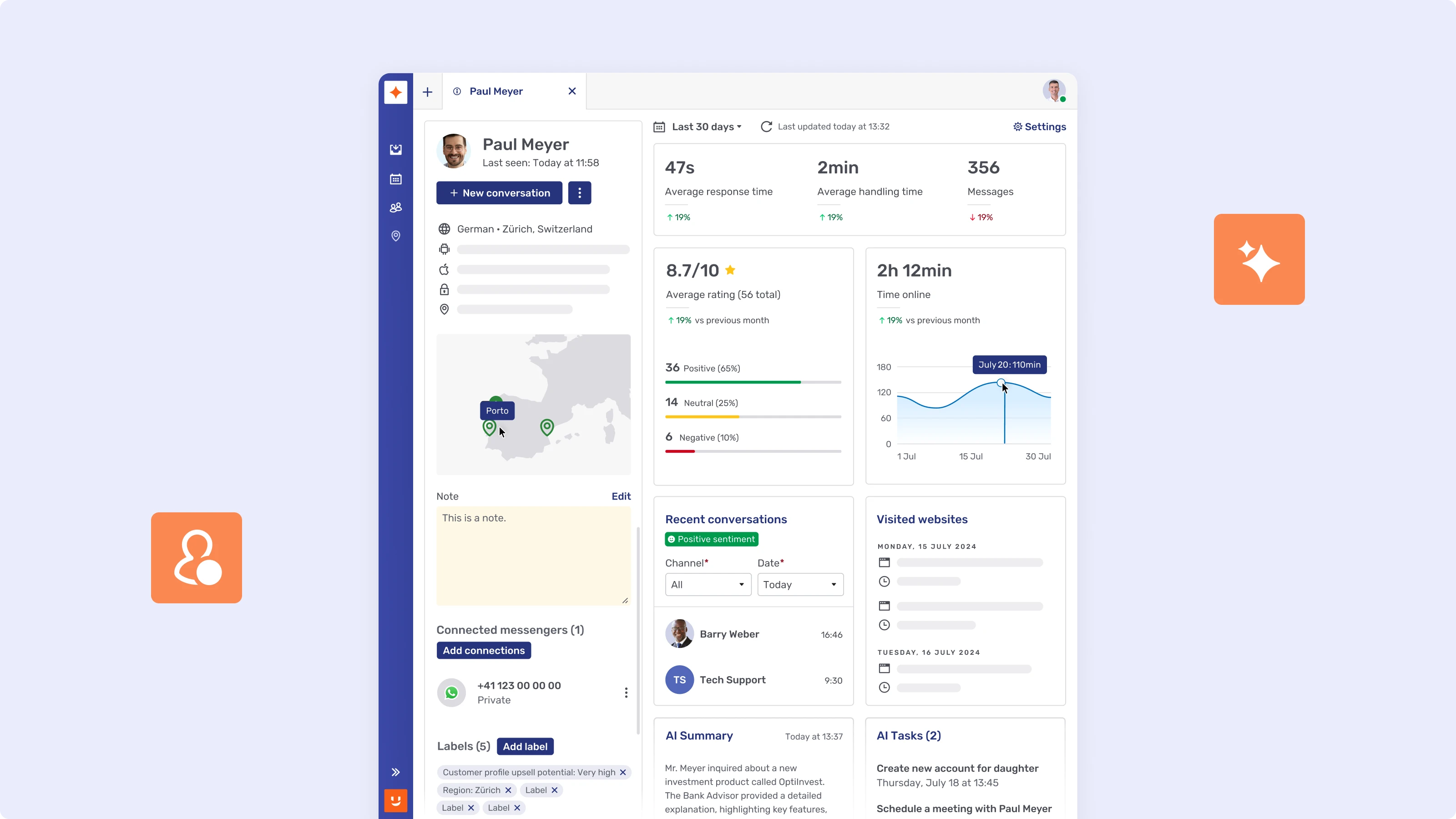
Unblu Workbench consolidates every channel – chat, Secure Messenger, Video & Voice, Co-Browsing, and document handling – into one interface with full interaction history, so an advisor isn't reconstructing context before every conversation.
AI-assisted drafting gives back the minutes that add up across a full client book. Suggestion Support draws on an advisor's own approved knowledge base to generate a suggested response inside their existing workspace, whether that's a routine account question or something tied to the client's broader financial planning process. The advisor reviews, edits, and sends this suggestion manually. Nothing goes to a client unreviewed.
Applied across a book of 100+ clients, minutes saved per interaction compound into hours reclaimed for the conversations that actually build the relationship. This is the same mechanism behind AI for wealth management more broadly, where AI handles the operational layer so the advisor's time goes to judgment instead of admin.
How to turn occasional contact into proactive engagement
Not every engagement needs to be a scheduled meeting. Frequent, low-effort touchpoints build the ongoing sense of personal attention clients are asking for, without requiring calendar time from either side. This could be a market update, a piece of content that builds a client's financial literacy, or a quick check-in. Active listening in the moments advisors do have matters just as much as frequency; a client who feels heard once is more forgiving of a quieter month than one who feels processed.
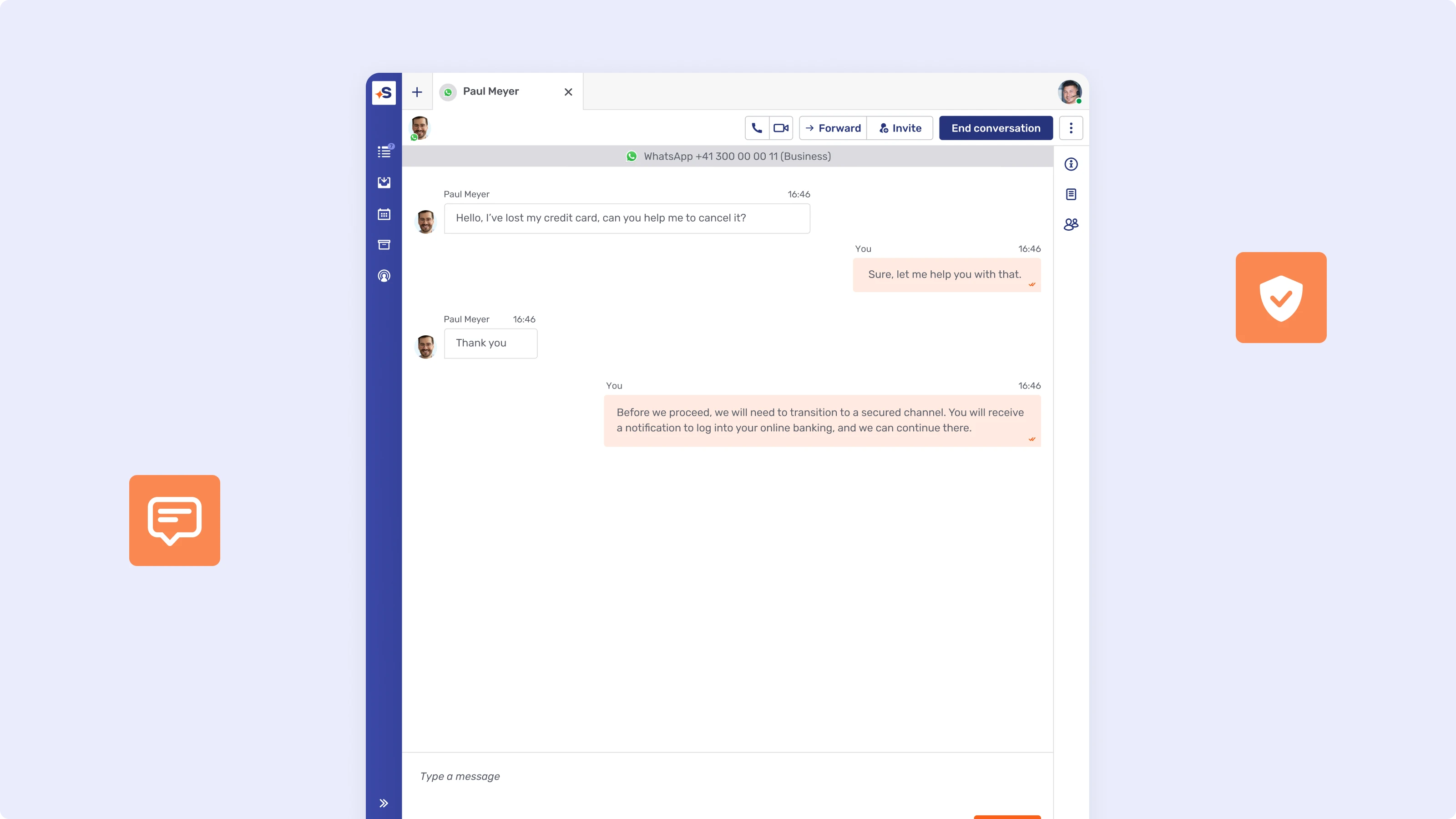
Secure messaging replaces the WhatsApp problem with a compliant alternative, not a ban. Clients already want to reach advisors the way they reach everyone else. Since December 2021, regulators have fined over 100 firms more than $2.2 billion for failures related to off-channel communications. This refers to employees conducting business over personal texts, WhatsApp, and other unarchived apps the firm never captured. Secure Messenger gives advisors the same asynchronous, always-available feel clients want from consumer apps, fully retained and auditable.
Broadcasting by client segment turns one message into many relevant conversations. Grouping clients by shared interests or investment focus, such as retirement planning, estate planning, tax planning, a client's risk tolerance, or a particular asset class, means a single relevant update can go out to everyone it applies to at once, rather than requiring a bespoke message per client. It raises contact frequency without a linear increase in advisor effort, and keeps the content each client receives tied to their actual client needs rather than a generic newsletter.
How to raise the quality of high-value conversations
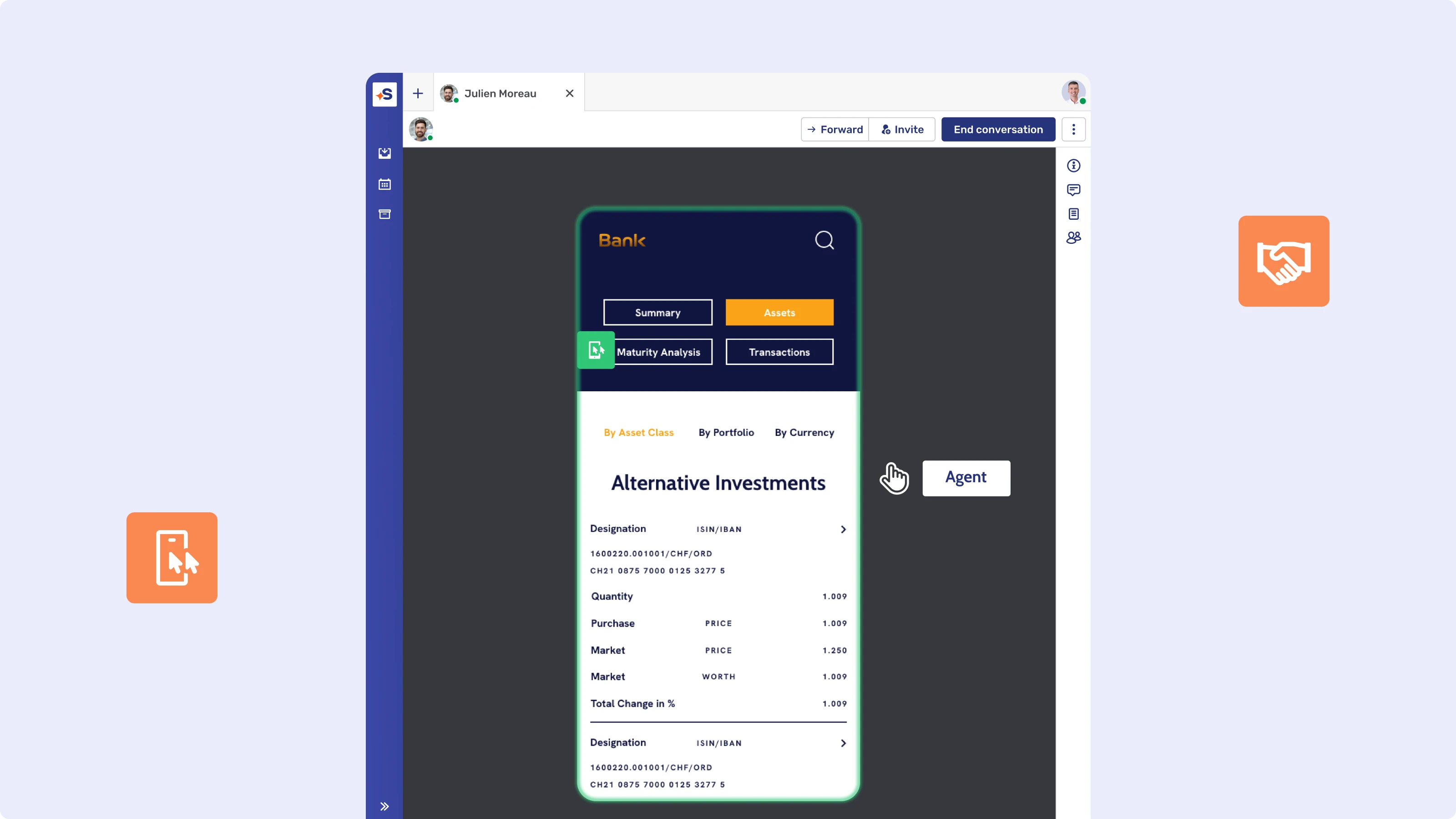
Video & Voice covers the meeting itself, but Co-Browsing and Co-Apping cover what happens inside it. When a conversation involves walking through a specific investment opportunity, reviewing investment performance together, or completing an onboarding process, being able to see and annotate the same screen (or the same mobile app view) turns a conversation about the client's financial plans into a session done together, in real time.
That kind of shared context builds more confidence in a client's own financial planning than a phone call ever could, and gives the advisor a better read on the behavioral finance and emotional intelligence side of the conversation – the parts of the job a screen share can't fully replace, but comes closer to than email ever will.
Document Collaboration removes the back-and-forth from anything requiring a signature or a shared review. Contracts, agreements, and reports that once meant emailing a file back and forth can instead be reviewed and completed together, live, across PDF, Word, or Excel formats. This cuts both the elapsed time and the number of touchpoints a document-heavy conversation requires.
The shift that matters
Client engagement was never a willingness problem. The Accenture, Capgemini, and EY data all suggest that clients want more contact and are actively spreading relationships across more firms when they don't get it.
Advisors also want to give them this extra time, but operational work eats the time that would go toward it. The firms solving this aren't asking advisors to work harder; they're removing the admin layer between an advisor and the conversations that actually matter. This allows them to adapt to each client's communication styles and client needs rather than a one-size-fits-all approach, which is the same principle behind private banking digital transformation more broadly.
Unblu Workbench, Secure Messenger, and Suggestion Support are built around exactly this: give advisors back the time operational work consumes, and put the tools for high-value conversations – Co-Browsing, Co-Apping, Document Collaboration – inside the same workspace.