

.png)


Kitces Research finds that advisor productivity peaks at around 16 hours of client meetings a week, roughly 40% of the working week. Below that, advisors leave value on the table. Past it, the curve flattens, and what makes the difference is how well each meeting is prepared and followed up.
Yet that preparation and follow-up is exactly what gets squeezed when 41% of an advisor's time still goes to operational tasks, according to Capgemini's World Wealth Report 2026. Three-quarters of relationship managers want AI-enabled systems to take that work off their plate.
This is indeed useful, but technology adoption is not what separates the most productive firms from the rest. Across advisory firms, client mix, advisor expertise and professional support staff matter more. Tools help only when they remove friction between the advisor, the support team and the client conversation. That makes productivity as much a practice management question as a technology one. The four ways below run in order, from measuring the week to shortening the work around every meeting, and each step within them is something a firm can act on.
Measure where the advisor's week goes
Track time by category, not by task
Split the week into client-facing time (meetings, financial planning and financial advice), preparation and follow-up, internal collaboration, and administration. Then log each client interaction under one of those headings.
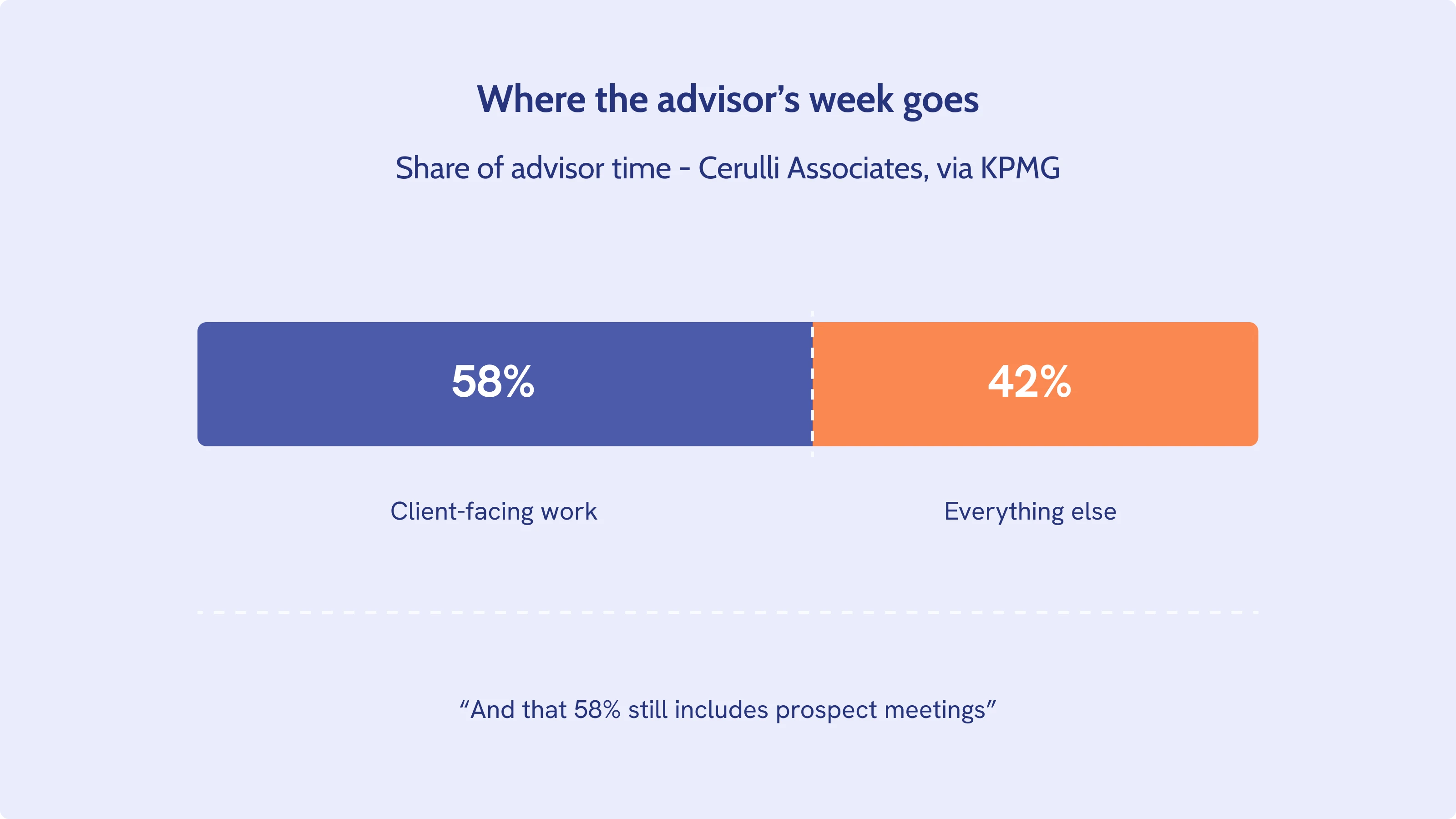
Cerulli Associates data published by KPMG puts client-facing work, a broader measure than meetings alone, at 58% of an advisor's time. That figure includes prospect meetings, so the share spent with existing clients is smaller still.
Put a price on the hour
Kitces suggests dividing the advisor’s annual income by 2,000 hours to get an hourly cost, then multiplying by the hours a task takes. Advisors in firms generating more than $1 million per advisor get there largely by protecting client-facing time, so any task done by the most expensive person in the firm deserves a second look. Treat the split as a standing measure rather than a one-off audit: KPI tracking only works if the same categories are reviewed every quarter.
Protect the hours that earn revenue
Set a meeting target and defend it
The Kitces 40% benchmark gives a concrete number to plan around. Anything that crowds client meetings out of that block, from internal hand-offs to document chasing, is the first candidate for removal or delegation. That leaves wealth advisors free to spend the block on conversations about each client's financial goals.
Treat unmet client demand as the signal
Accenture found 39% of clients want to hear from their advisor more proactively, and 28% are willing to take more meetings. The demand is there; capacity is the constraint. It is the same pressure behind financial advisor client engagement, and it has a commercial edge: clients now use 2.3 wealth managers on average, according to EY, so staying responsive is one of the clearest ways to stand out.
Give support staff the context to take work off the advisor
Delegate, because leverage beats effort
Kitces Research found advisors who work with paraplanners or associate advisors tend to serve an average of 120 clients, against 73 for pure solo advisors, with take-home advisor compensation of $279,000 versus $155,000. Delegation tends to work best when clients are segmented, so that a service advisor owns routine contact for one client segment and the lead advisor keeps the relationships that need senior judgment.
Make the conversation record shared
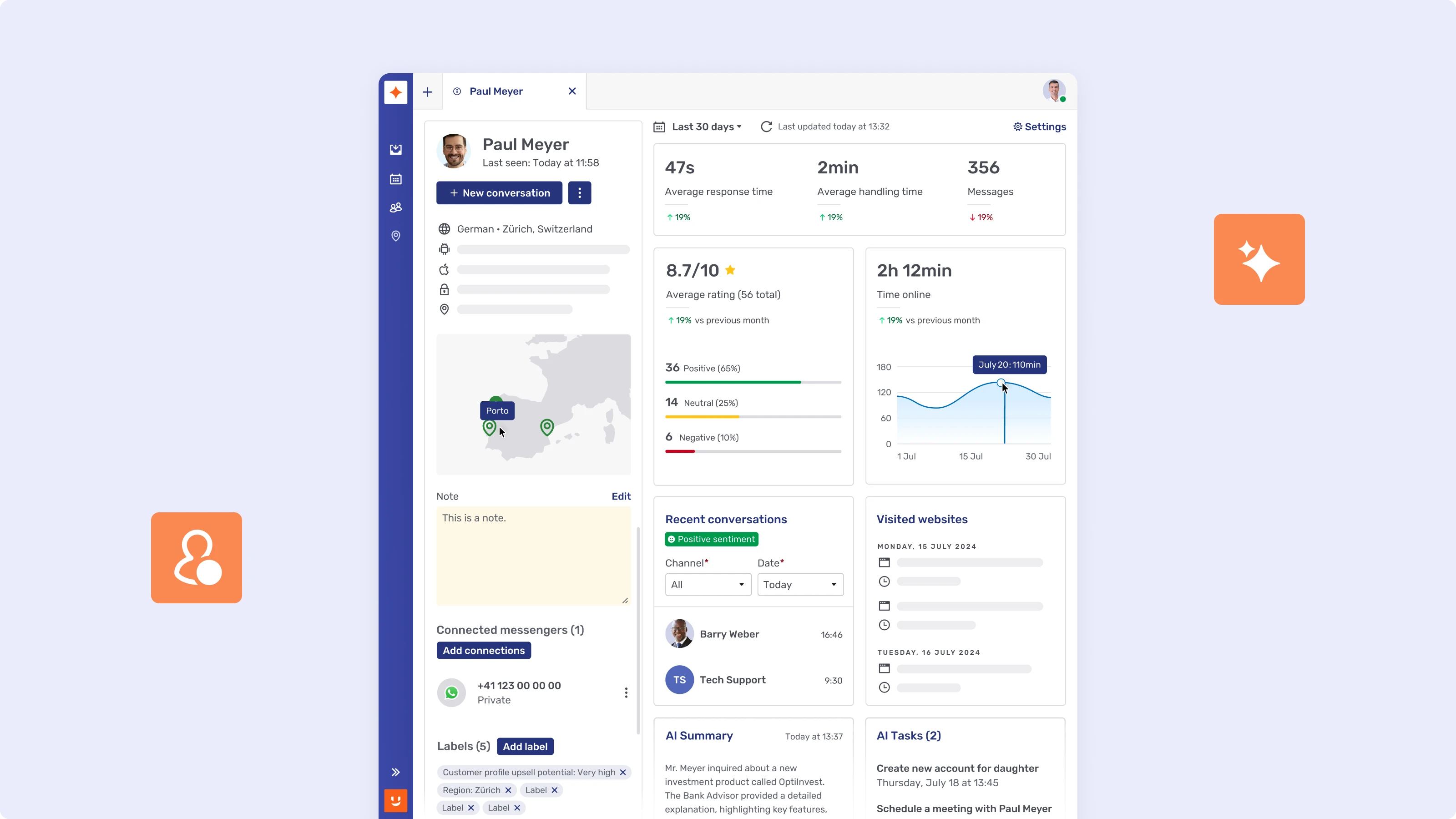
Delegation only works when the person picking up a task can see what has already been said to the client. Unblu Workbench holds every interaction across Secure Messenger, Video & Voice, Co-Browsing and document handling in one place, with full interaction history, customer notes and labels, so a client service associate can pick up a thread without a briefing from the advisor. Advisors who work in Avaloq RM Workplace get the same Unblu capabilities embedded in the tool they already use, and Salesforce CRM data is surfaced alongside the conversation. That kind of data integration with existing CRM systems keeps operational workflows intact, and it means routine steps such as client onboarding and document management can be handed to support staff without losing the thread.
Shorten the work around each meeting
Prepare and follow up in less time
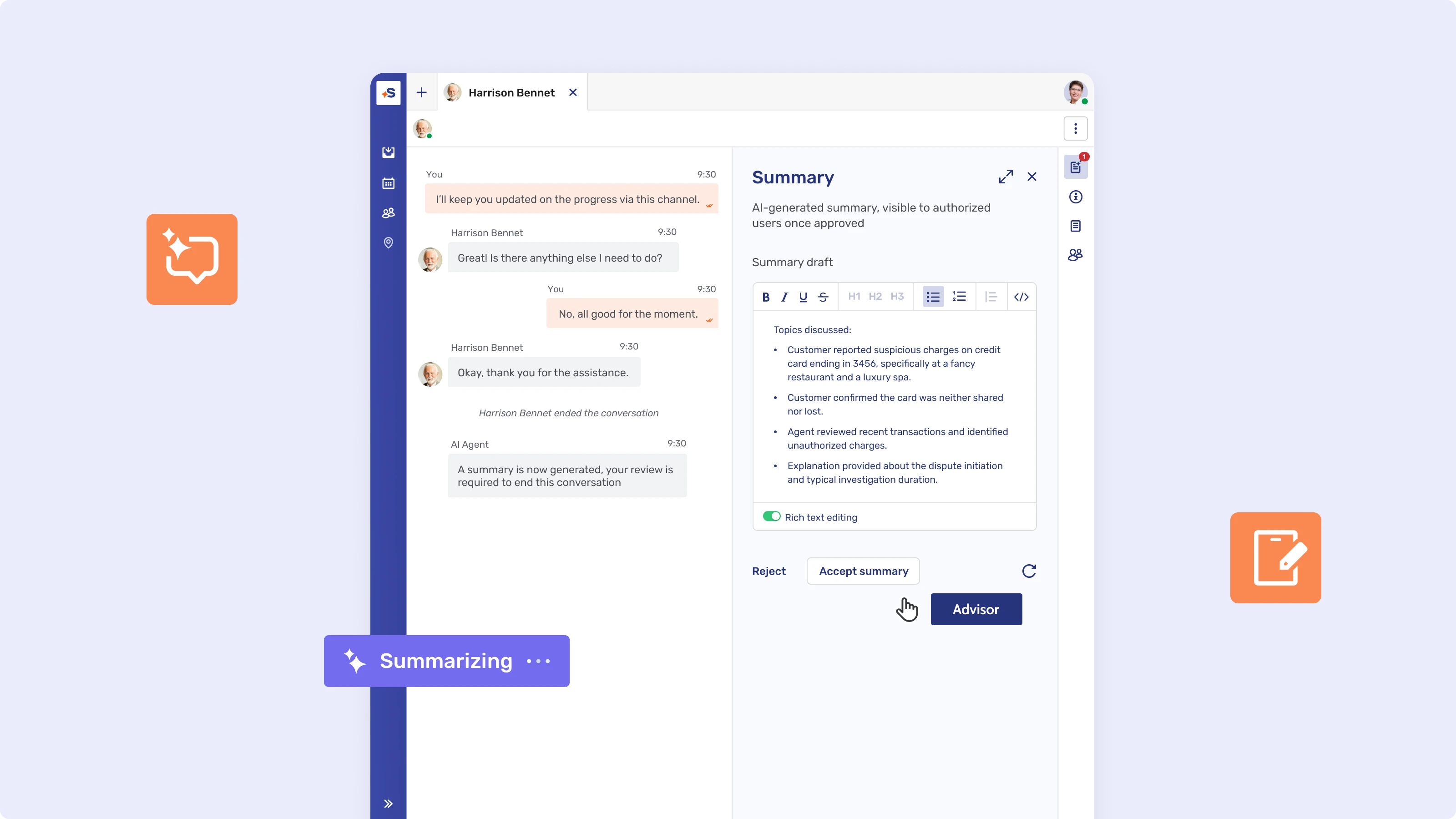
Summaries and Transcripts produce an AI-generated summary at the end of a conversation or at handover, plus call transcripts that make a discussion searchable for documentation and compliance. The advisor reviews and files instead of writing up from memory, and a summary at handover is a simple form of workflow automation: the next person receives the context without a briefing. Suggestion Support drafts replies from the firm's approved knowledge base inside the advisor's workspace; the advisor edits and sends, and nothing reaches the client unreviewed. AI-powered advisor productivity works best on drafting and summarizing, where an advisor reviews the output, rather than on advice or suitability. AI for wealth management covers the principle in more depth.
Make the meeting itself do more
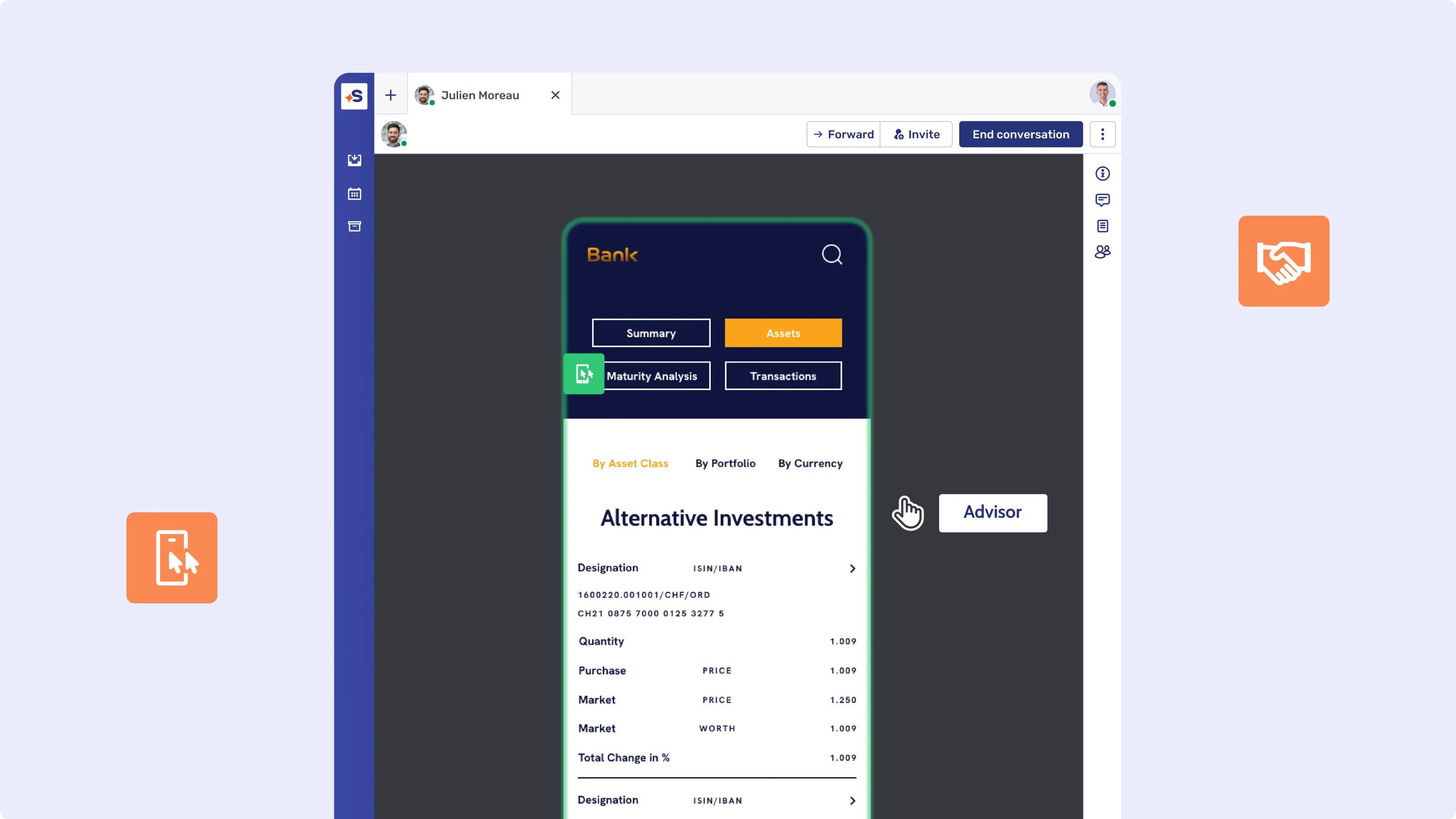
Co-Browsing and Co-Apping let advisor and client work through an account, a financial plan or a mobile app screen together, and Document Collaboration closes a review or signature in the same session instead of a chain of emailed attachments. A global private bank that rolled out Secure Messenger to 300+ relationship managers across eight countries reported a 40% reduction in RM and back-office workload and 30 minutes saved per meeting. At Tatra banka, a rollout from 20 pilot bankers to 160 reported a 40% improvement in process efficiency, with client NPS rising from 82 to 94.
Keep the speed on a compliant channel
Moving quick client conversations to personal messaging apps saves minutes and creates rework later, along with cyber and regulatory risks the firm cannot see or audit. Since December 2021, more than 100 firms have been fined over $2.2 billion for off-channel communication failures. A secure channel that is as fast as the consumer app removes the temptation, which is the same discipline behind private banking digital transformation done well.
Put together, the change looks like this:
Start with the hours, not the tools
If only one change is possible this quarter, make it the measurement. Track a normal week by category, compare meeting hours with the 40% benchmark, and mark which tasks could move to support staff or shrink with a draft and a summary. The tools earn their place after that, because the firm then knows which hours they are meant to protect. Fewer hours lost to administration also make it easier to keep up the contact behind client retention.
Unblu Workbench, Secure Messenger and Suggestion Support can help with the last two steps, once the firm knows which hours to protect, as part of Unblu's wider wealth management client experience approach.