

.png)


There is no one way to improve customer service in banks. Customers have diverse needs and can contact banks across many different touchpoints, making it challenging to offer a consistent, personalized services at all times.
As Accenture puts it, “in the relentless pursuit of efficiency, something vital has been lost: the human connection.” Perhaps this is why only 24% of customers report satisfactory call center experiences.
These gaps illustrate why proven strategies to improve customer service in banks increasingly focus on reintroducing the human element through high-touch digital collaboration tools that balance efficiency with empathy and trust. Recent Personetics 2025 research shows that 84% of customers would switch banks for better personalized financial guidance.
When this balance fails, it leads to a fractured journey and irritating pain points for customers.
The problem of uneven experiences
It is common for financial services industry institutions to have uneven digital experiences across the banking journey, with certain organizations excelling in one area more than another. For example, traditional banking institutions spent years looking in envy at the sleek, digital-first customer experiences that fintech companies and challenger banks introduced.
There is a good reason for this shift. Fintechs have reshaped customer service standards at traditional banks by normalizing mobile-first, frictionless interfaces that prioritize speed and ease of use. Today, 60% of consumers want to transact with single-platform financial institutions, and the user-friendly design of fintech companies continues to attract younger customers, particularly millennials.
As a result, instant access and intuitive experiences (once differentiators) have become baseline customer expectations for traditional banks seeking to meet modern customer service standards.
Developments in traditional banking
To combat this, traditional banks invested heavily in digital transformation initiatives. Today, every bank has an app, a website, and an ever-expanding set of digital tools designed to streamline everyday interactions.
However, leaning too heavily into digital self-service can backfire, where customers only get to speak to an agent after “frustrating digital telephonic mazes,” even though expectations now match those of digital-native brands.
Digital transformation improves customer experience in banking by automating routine queries and processes, freeing human advisors to focus on complex, high-value client needs that require clarity, reassurance, and judgment. This means the most effective ways to improve customer service in banks combine digital efficiency without sacrificing the human touch.
These developments are essential, and banks should continue investing in them – but not at the expense of authentic customer service. Consider the story of a customer whose account was frozen and who struggled to reach a real person at a fintech provider. The app worked flawlessly, until it didn’t. When digital convenience replaces human access entirely, the experience quickly breaks down.
Traditional banks are also lacking
It isn’t just fintechs that are failing in this area. Incumbent banks should have a dedicated history of offering personalized and excellent customer service experiences. They have a solid place in local communities and brand recognition that should inspire confidence.
So, why are they also struggling so much to maintain trust across Europe? By all accounts, it isn’t because they are lagging behind on the quality of their digital banking and mobile banking experiences. Instead, it is due to a perceived lack of empathy and dependability.
Key areas of focus for customer service success
What this tells us is that success in banking customer service is about offering an even and human experience, with access to the right level of customer support at all times, across all touchpoints.
There are three key areas that banks should focus on to achieve this.
Internet banking
When we talk about internet banking, we refer to online banking via a bank’s website. Whether a visitor is an existing customer or simply browsing, they should be able to find information easily and access support without friction.
Prospective customers
Prospective customers, in particular, want the freedom to explore at their own pace — gathering information, comparing options, and only engaging with the bank when they feel ready. This makes strong self-service tools, such as AI-powered chat channels, an essential part of modern customer support.
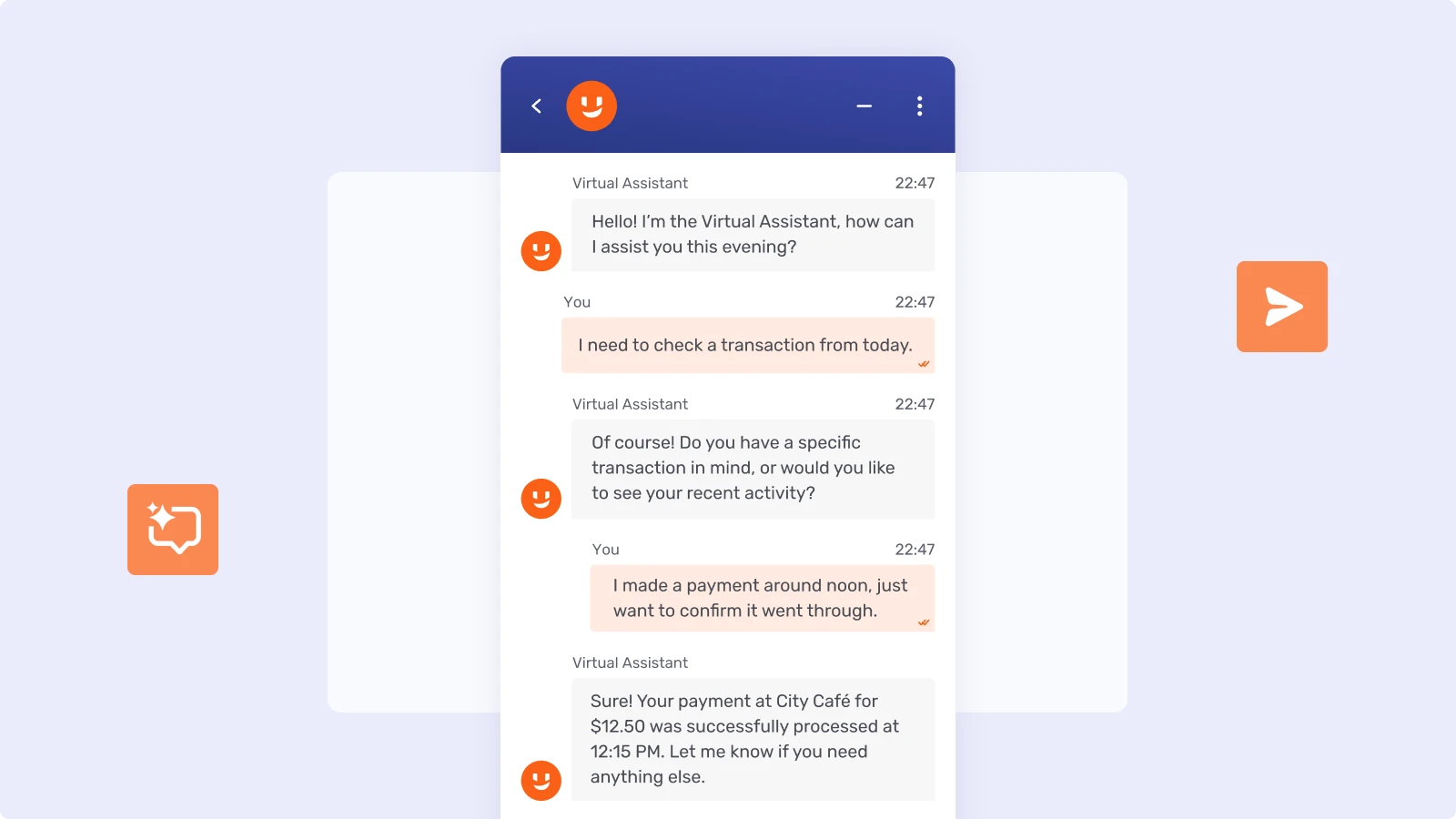
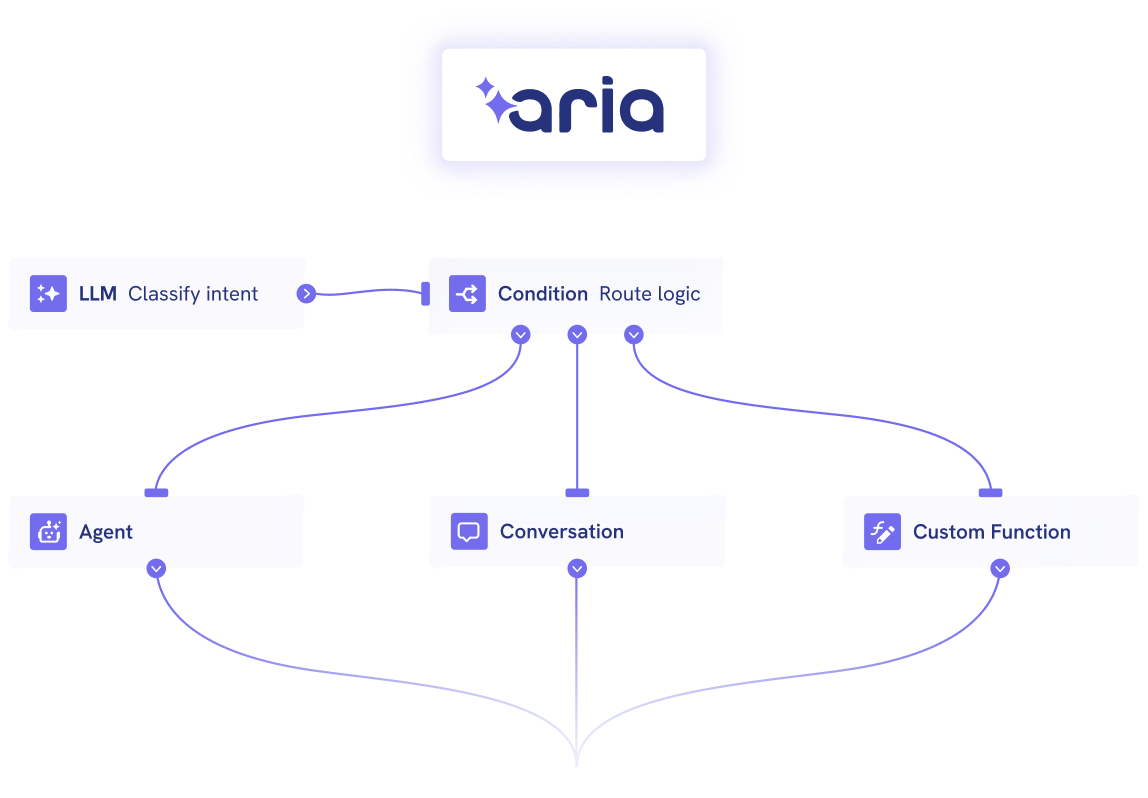
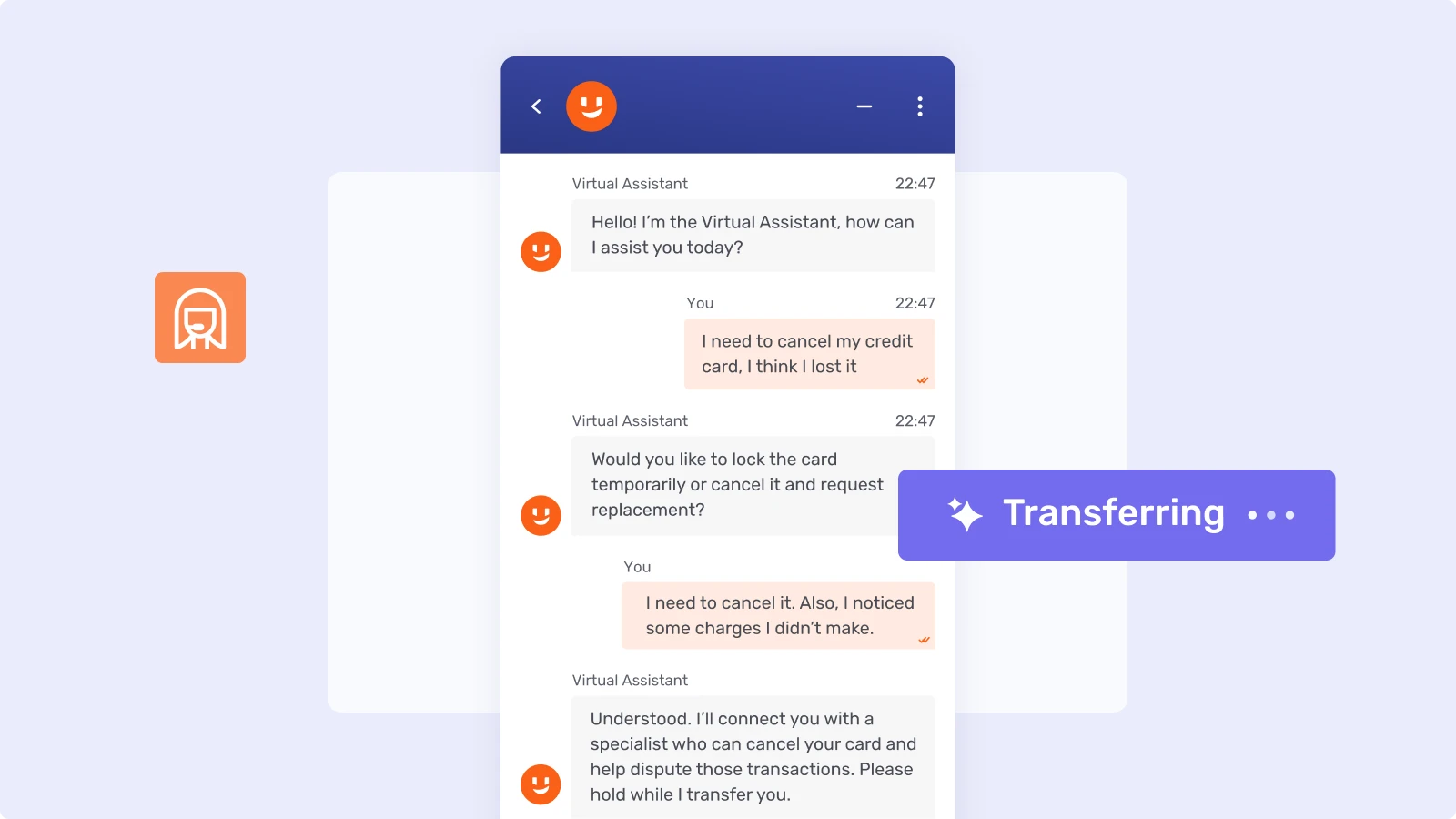
AI plays a critical role in modern banking customer support by acting as the first line of engagement through intelligent virtual assistants. Powered by Large Language Models (LLMs), these tools provide accurate, 24/7 responses to common questions, significantly reducing call center volumes and wait times.
Crucially, when human support is needed, agents can view the entire conversation history, allowing them to step in with full context. With the Unblu AI Virtual Agent, banks ensure seamless handover from bot to human – combining efficiency with continuity and trust.
Current customers
When it comes to the current customer base, it is essential that the same tools work safely and securely behind authenticated areas. Not only will this allow the customer to self-serve on a higher number of issues, but the conversations will be stored (according to regulations) so customer service agents can get a full customer interaction history even after weeks or months.
This means that when a customer requires a real person, the agent can offer the correct level of customer support available. For example, the Live Chat function isn’t enough to address the customer query, the agent can escalate to a Video & Voice call or start a Co-Browsing session.
Raiffeisenbank: Boosting sales through personalized service
The Prague-based bank Raiffeisenbank embraced these conversational tools as part of their strategy to deflect phone calls and ease the burden on contact centers.
But beyond managing to maintain strong customer satisfaction ratings and double agent productivity, the superior service quality directly led to a fourfold increase in digital sales conversions after nine months.
Mobile banking
Mobile banking has overtaken internet banking in popularity, yet many apps remain “functionally correct but emotionally devoid”. While transactions work, the service often falls short of the richer, more reassuring experiences available on desktop. To close this gap, digital channels such as live chat and video or voice support must be accessible directly within the mobile app, not siloed elsewhere.
Banks can implement personalization in digital banking services by using Co-Apping technology to deliver real-time, guided assistance inside the mobile interface. By tailoring support to the user’s immediate context (what they are seeing, doing, or struggling with) banks can turn static app journeys into collaborative experiences.
.webp)
Unblu’s mobile-specific Co-Browsing allows advisors to see exactly what the customer sees in-app, enabling frictionless, high-touch support on the go. This approach has been shown to increase engagement and loyalty, restoring the human connection without sacrificing mobile convenience.
PostFinance: Consistent service excellence
The Swiss postal service found that providing a consistent experience across online channels was a challenge. After first implementing Co-Browsing and Live Chat into their website, they realized that they would need to take similar steps to bring the app experience in line.
This meant turning to Co-Apping, along with other enhancements.
In-person bank branch banking
With the emphasis on digital, it is easy to overlook the role of the physical branch, especially as there have been falling branch numbers in recent years. Yet 82% of customers still believe access to a local branch is extremely or very important, particularly for complex or sensitive tasks.
Banks can reduce customer wait times in physical branches by adopting digital receptionist models that connect visitors to remote specialists via high-definition video. This approach ensures customers receive immediate assistance while allowing banks to extend expertise across multiple locations without the cost of full-time, on-site staff. Using solutions such as Unblu Branch, even low-traffic branches can be transformed into efficient, technology-enabled advisory hubs.
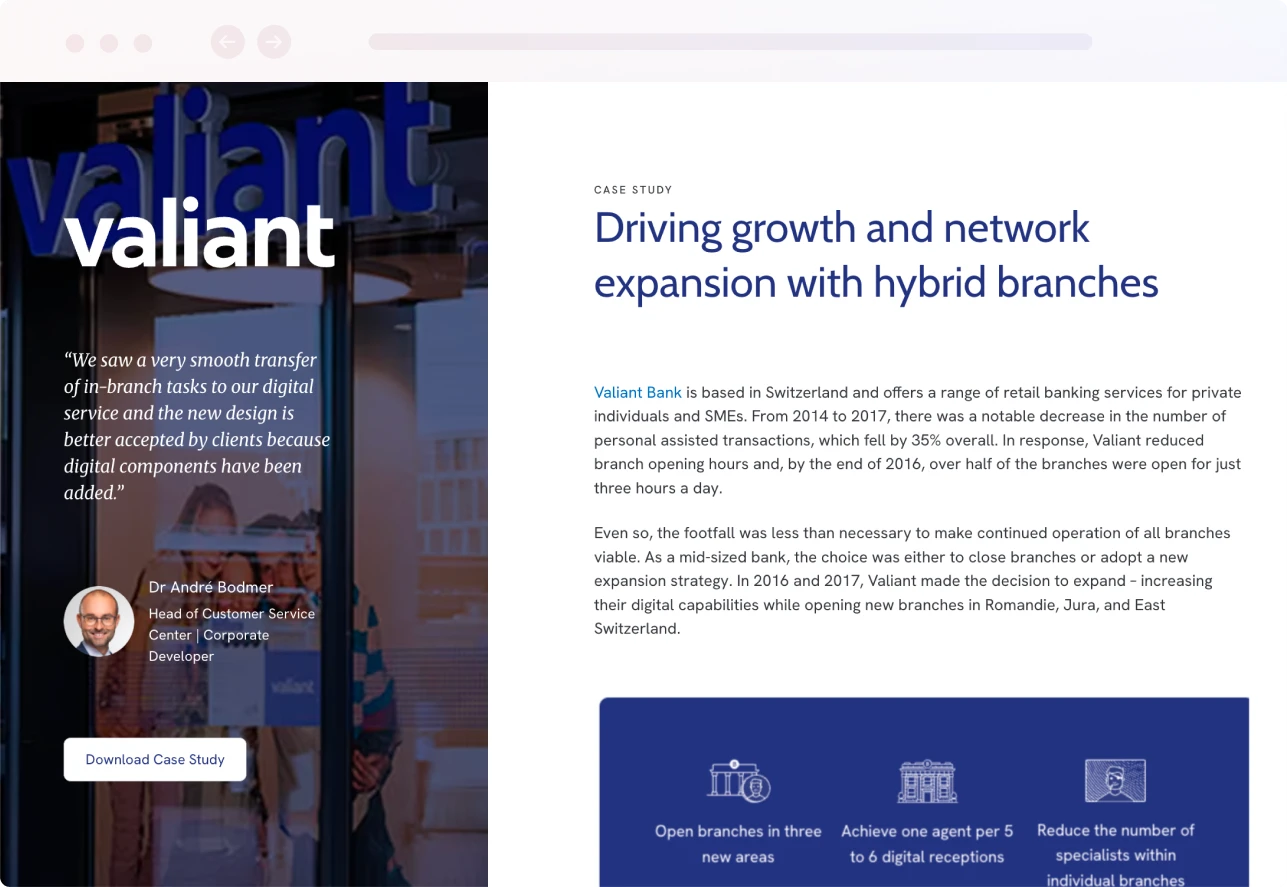
Valiant Bank: Transforming the branch experience
This is exactly what the Swiss retail bank Valiant Bank did when faced with falling in-branch footfall. By embracing a hybrid approach, Valiant was able to extend its opening hours by adding a digital reception. This meant that one agent could serve multiple locations remotely, which cut cost centers while guaranteeing quality customer service.
The approach was so successful that Valiant was able to open branches in new locations, improving their profitability and better serving the local community.
Consistency across customer touchpoints
To provide an exceptional customer experience, banks must meet customer satisfaction expectations across the entire customer journey. This is the main challenge that the banking industry is facing, after having invested so much in developing a digital customer experience that meets customer demands.
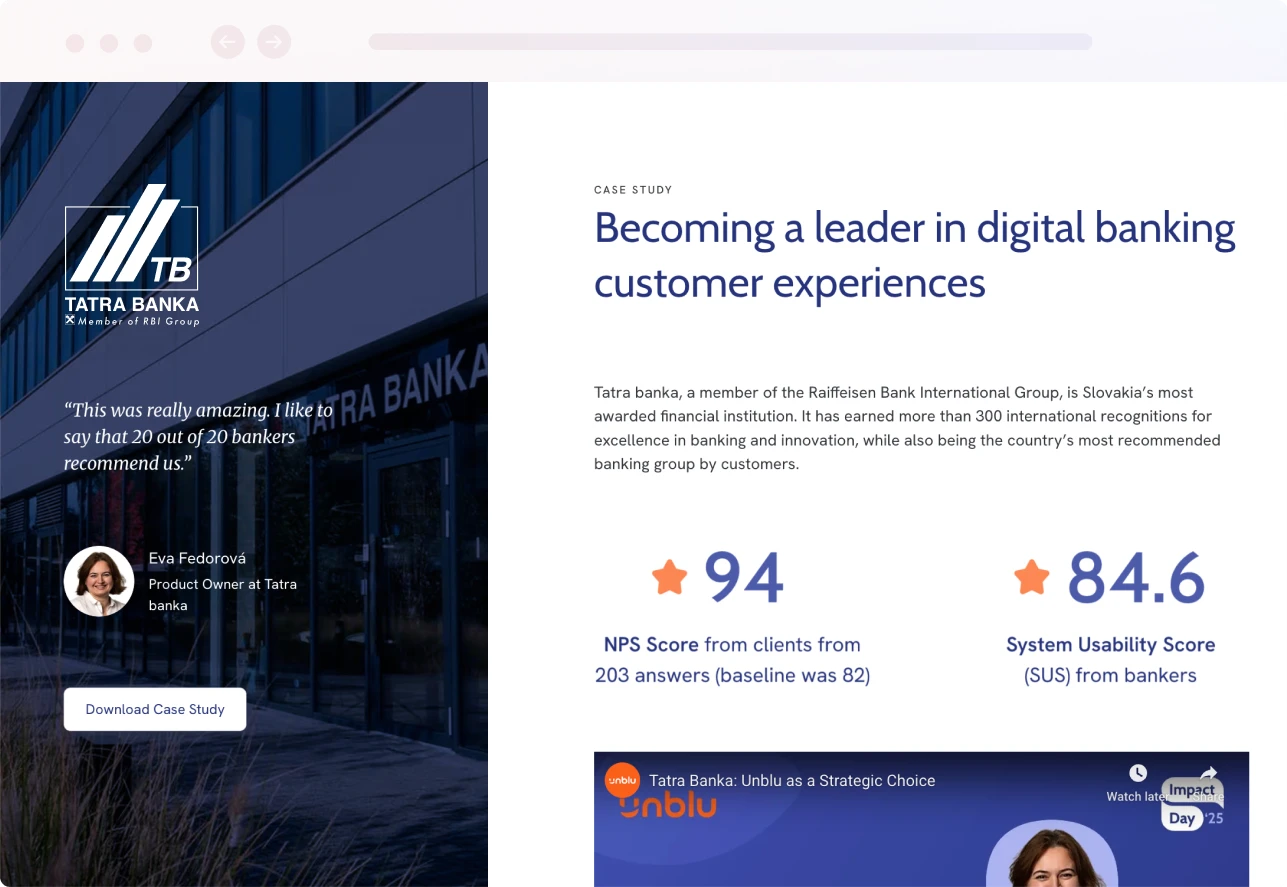
A recent example comes from Tatra banka, which piloted Unblu Co-Apping to enhance guided interactions. Over six months, they supported more than 3,000 conversations, amounting to 14,000 minutes of advisory support. In the end, they managed to improve efficiency by 30–40%, reduce process time by around 40%, and achieve outstanding customer satisfaction scores (System User Satisfaction [SUS] = 92.6, Net Promoter Score [NPS] = 94).
This demonstrates how modern tools that unify channels and empower advisors are among the most impactful ways to improve customer service in banks.
Embracing a hybrid approach
Ensuring a personalized customer experience means embracing the best of digital technology and artificial intelligence alongside more traditional channels. To achieve this, the customer experience strategy must ensure consistency whether the individual reaches out via the website, mobile apps, or in a physical branch.
Unblu offers a robust automated solution that blurs the lines between digital and in-person experiences. Our Unblu Spark platform allows banking services to provide a consistent omnichannel customer experience that boosts customer loyalty and improves customer retention rates.